Ovulation Calendar
english german russian

Latest Articles

Ovulation Calculator: Understanding the Ovulation

Ovulation: Why Every Woman Should Use Ovulation Calculator

ovulation calculator Ovulation is a relatively complicated aspect of the female body, especially when compared to the simplicity of male hormones and reproductive issues. Not everyone falls into the category of the normal 28-day cycle, with issue-free fertility and menstrual cycles. For this reason, it is helpful to create an ovulation calendar. To many, the term "ovulation calculator" seems to call to mind a birth control method from ages past or a natural way to get pregnant. However, the ovulation calculator has uses beyond these confines. Read on to discover why every woman should use an ovulation calculator.

ovulation calculator
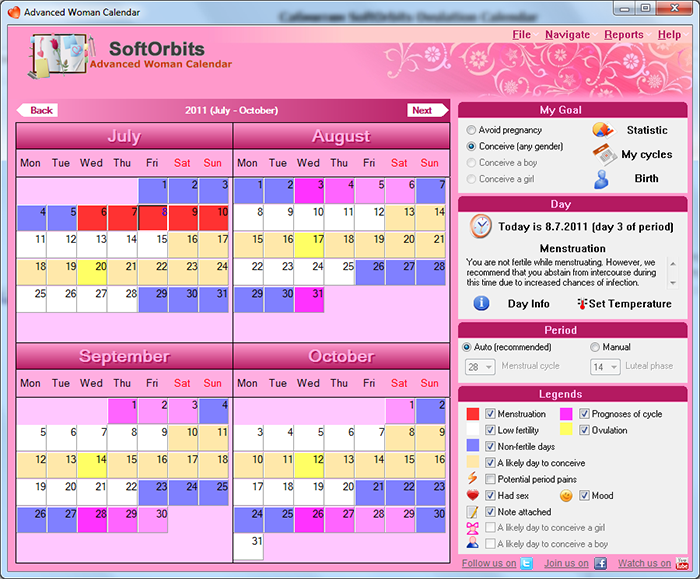
Try to use Advanced Woman Calendar - an easy-to-use ovulation calendar tool.
Download pregnancy ovulation calculator now! Order pregnancy ovulation calculator now!

The Ovulation Cycle

Based on those normal 28-day cycles mentioned earlier, Day 1 of the menstrual cycle is the first day of bleeding, or the start of your period. By Day 7, the egg is preparing for fertilization. Ovulation occurs between Days 11-21. If fertilization does not occur, hormone levels drop around Day 28, causing the lining of the uterus to be shed. It is passed out of the body, along with the unfertilized egg, which broke apart, in the form of blood.

Why use an ovulation calculator?

If you have any doubts or suspicions about the normality or regularity of your cycle, an ovulation calculator can help clear things up. To create one, you must first track your cycles for 8 to 12 months. Then, when you have this data, take the number of days in your shortest cycle and subtract 18. The number resulting is the first day of your fertility window, or the earliest day you can expect ovulation. Then take your longest cycle and subtract 11. The resulting number gives you the last day of your fertility window, or the last day you can expect ovulation. Ovulation should occur between this range of days during your cycle (Day 7 through Day 20, for example). Knowing this can help you pinpoint the timing of problems or issues you are experiencing with your cycle. Some of these are:

  • Polycystic Ovary Syndrome, or PCOS. This is a condition in which small cysts develop on the ovaries. They are usually benign, but they can lead to hormonal imbalances. Aside from the health risks associated with PCOS, (the development of diabetes and heart disease, just to name a few), this condition makes it more difficult to get pregnant (See How Long Will It Take Me to Get Pregnant?). If you know or suspect you have it and want to get pregnant, an ovulation calculator also know as conception calculator or conception calendar could be an extremely helpful tool. PCOS is common; as many as 1 in 15 women have it. In other words, you could have it and not even be aware of it. The tracking involved in creating an ovulation calculator can arm you with more information when you see your doctor.
  • Amenorrhea, or missed periods. The medical term for missed periods is amenorrhea. There are two types: primary and secondary. Primary amenorrhea is the name given to a young woman not starting to menstruate by the age of 16. Secondary amenorrhea is the name given to missed periods in a pre-menopausal woman (between the ages of 16 and 40). The causes of it can range from pregnancy to illness and from excessive athleticism to an eating disorder. While most women will notice if they miss a period, it is not unheard of for a woman to not notice. This is where an ovulation calculator comes in handy. If you are deliberately tracking your cycles and don’t have one, you are sure to notice and can therefore pursue finding out why. Similarly, if you have a teenage daughter and you are tracking her cycles, you are less likely to be the parent who is unaware of a teen pregnancy, illness, or eating disorder.
  • Painful ovulation, or mittelschmerz. Painful ovulation is known medically as mittelschmerz, a German word literally meaning, "middle pain." It is believed to be caused by the blood and fluid surrounding the egg irritating the abdominal cavity during ovulation. While many women experience it as a mere twinge, some experience severe pain as a result. If you have a worrisome or severe pain in the lower abdominal region once a month, it could simply be this pain caused by ovulation. If you have used an ovulation calculator, you will know when you are likely to ovulate, and can therefore confirm or eliminate this possibility based on it. If it is bothersome or extreme, or if it occurs outside of your fertility window, you will then be able to address the issue with your doctor based on your ovulation calculator.

As you can see, ovulation calculators have many uses outside the realm of fertility and birth control. They can be not just windows of fertility, but windows into health conditions of which you might have otherwise been unaware. Thus, an ovulation calculator can do much more than facilitate or prevent pregnancy. It can be used as a pregnancy calendar or baby geneder predictor and it might even help save your life or that of a loved one.

ovulation calculator
Try to use Advanced Woman Calendar - an easy-to-use ovulation calendar tool.
Download pregnancy ovulation calculator now! Order pregnancy ovulation calculator now!
Read Other Articles

© 2009-2010 eOvulation.com all right reaserved